


Heat Erasable Pen · 1 Pen + 6 Refills · Needle Felting & Sewing
VAT not applicable (art. 293 B CGI) · Free pickup-point delivery from €49 (France)
Description
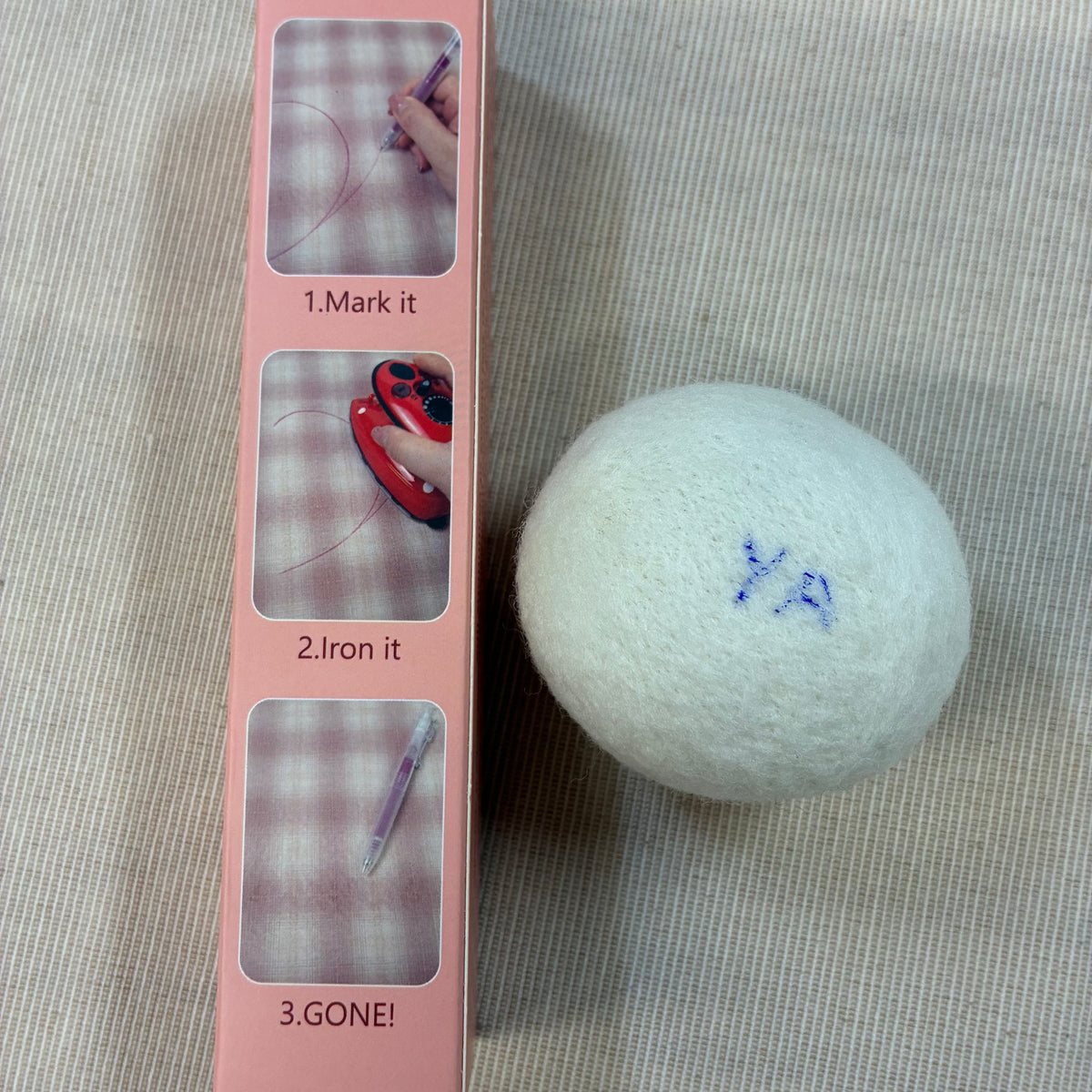
Mark it, felt it, and a touch of heat makes it all disappear.
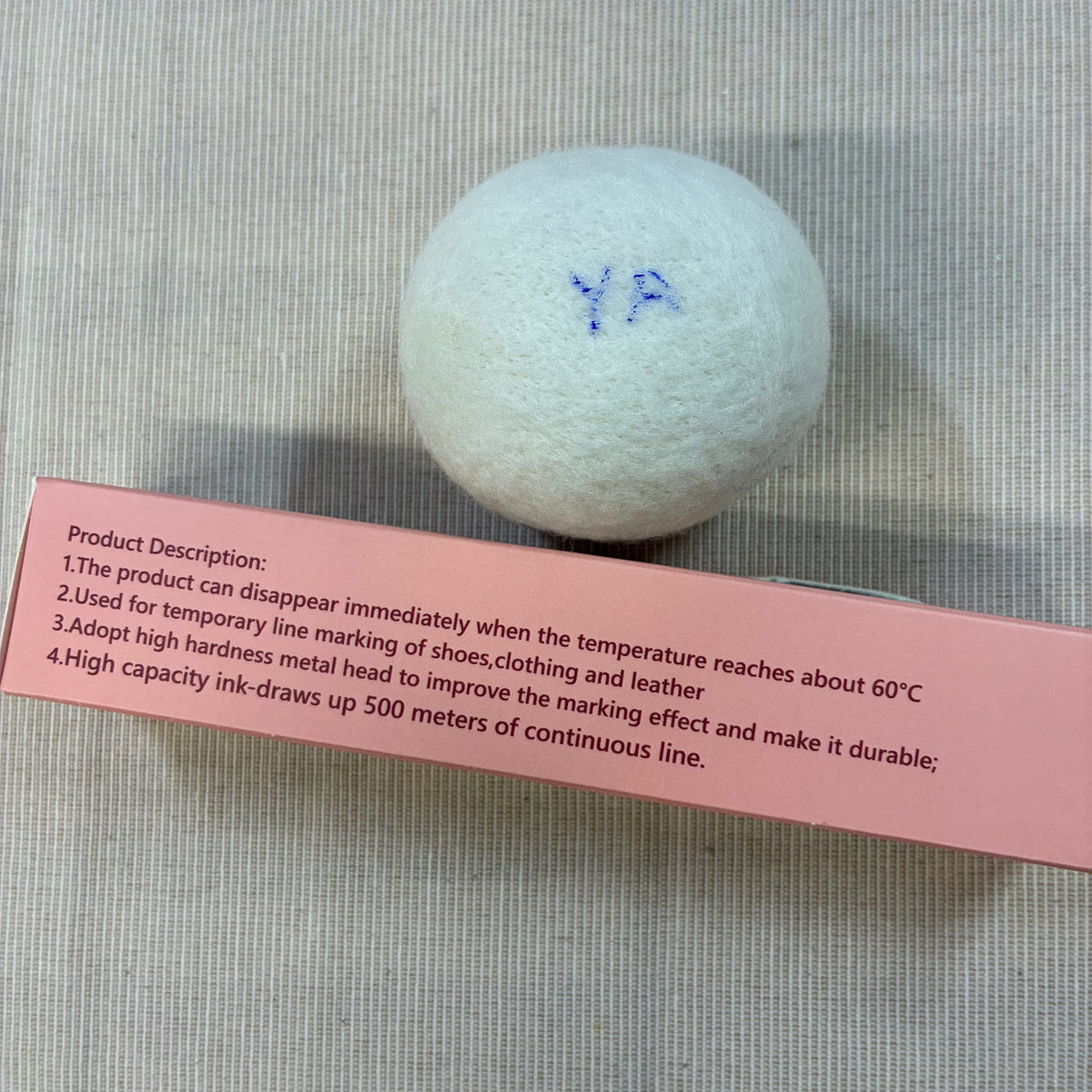
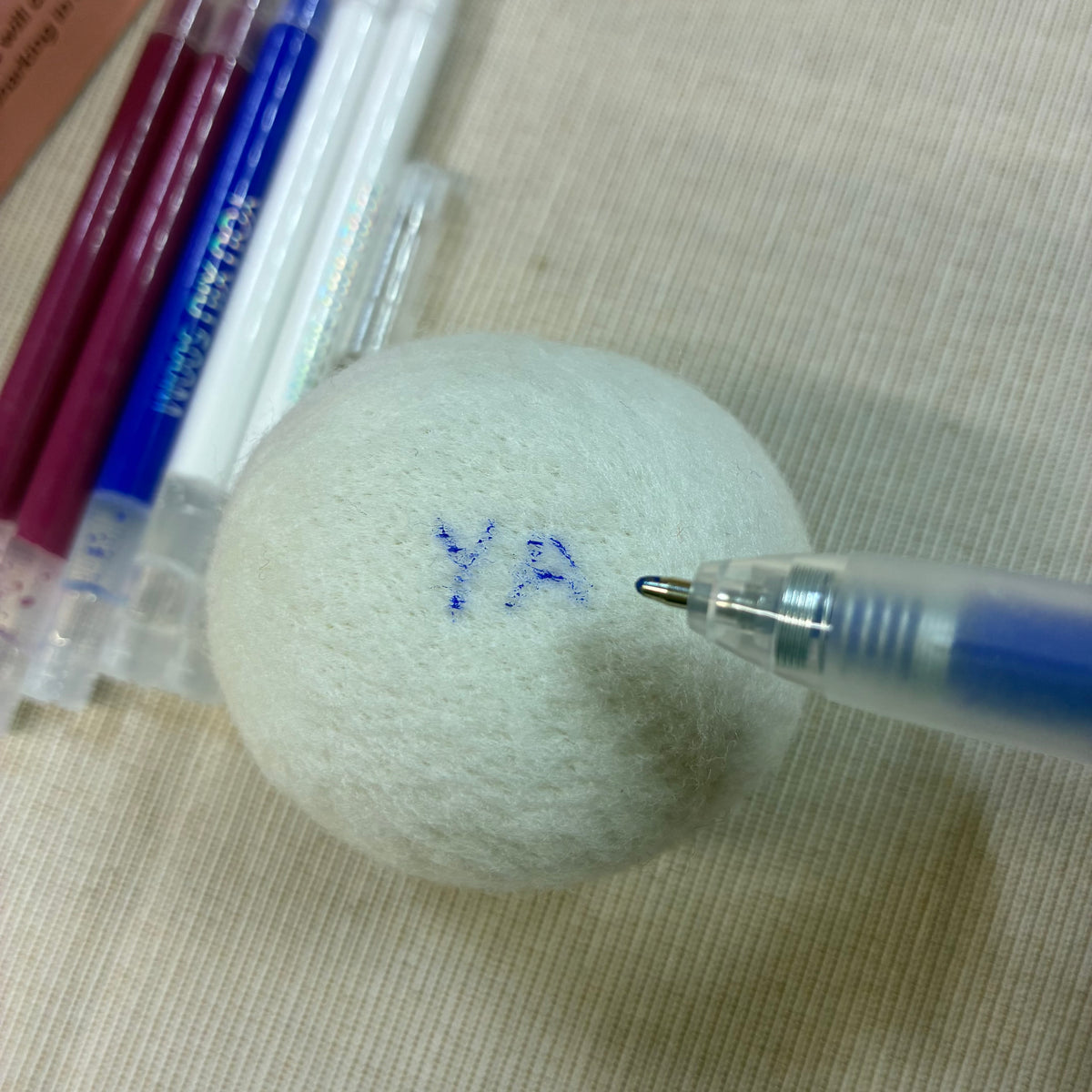
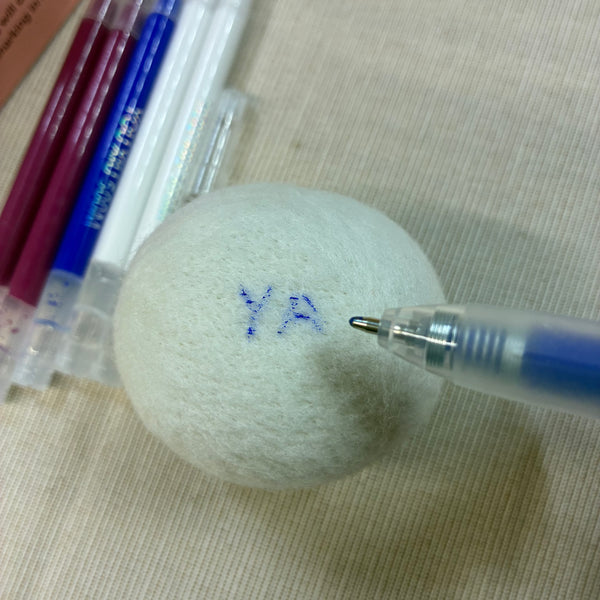
This heat-sensitive ink pen lets you place your guide marks before you needle or sew: where the eyes and nose go on a felted wool portrait, the outline of a template on a felt sheet, an embroidery motif on fabric. Once you are done, a pass of an iron or a heat gun is all it takes: the lines vanish at around 60 °C.
What's in the set
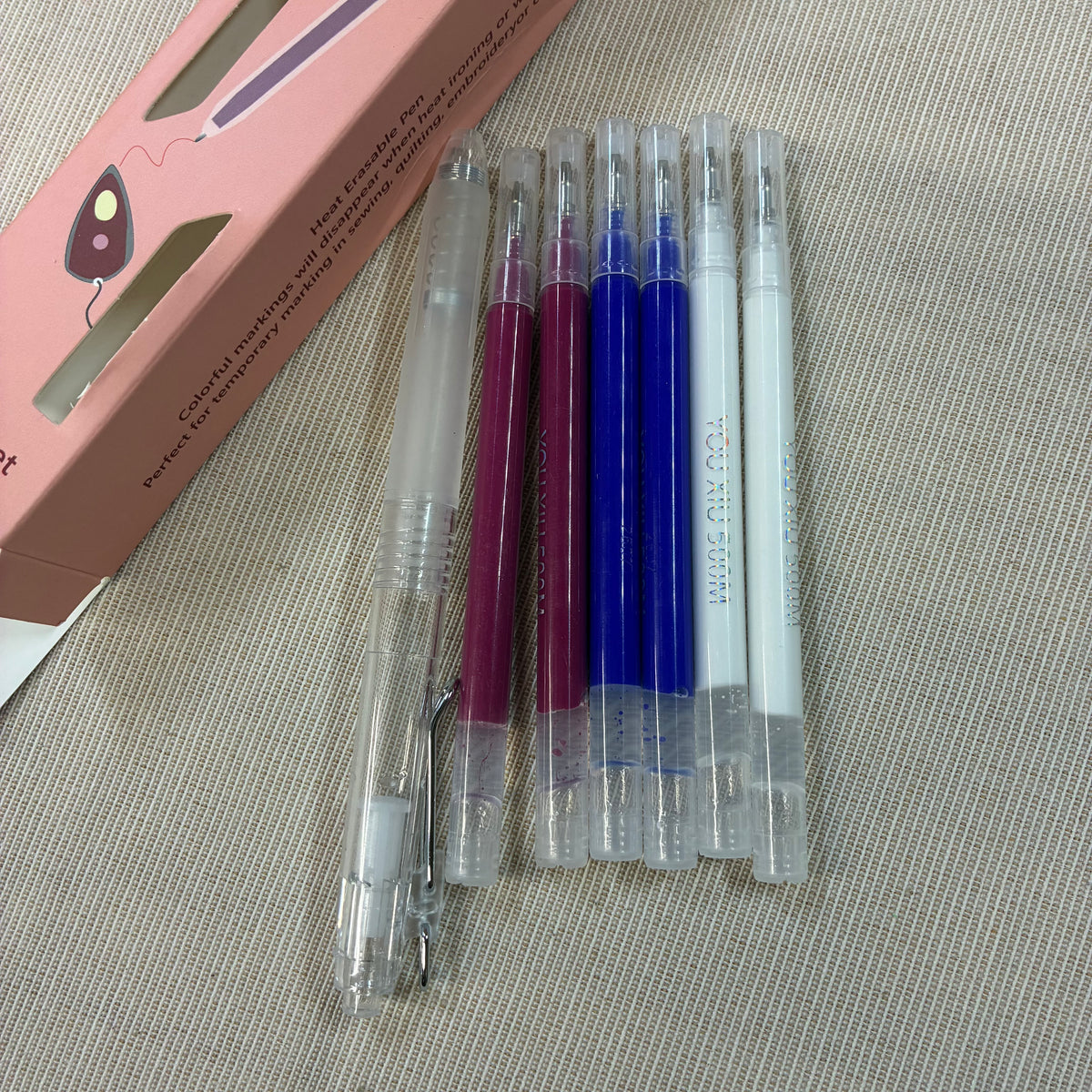
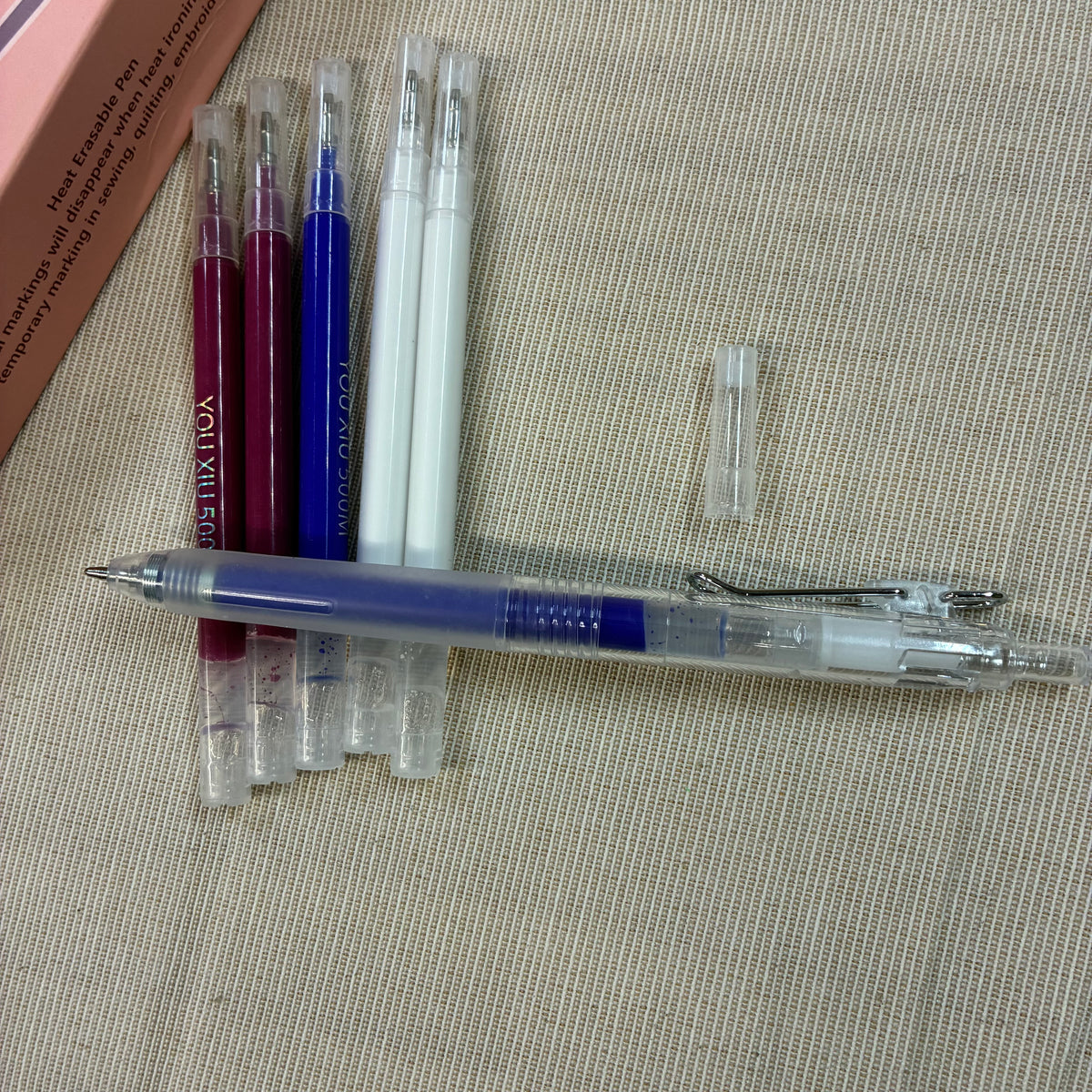
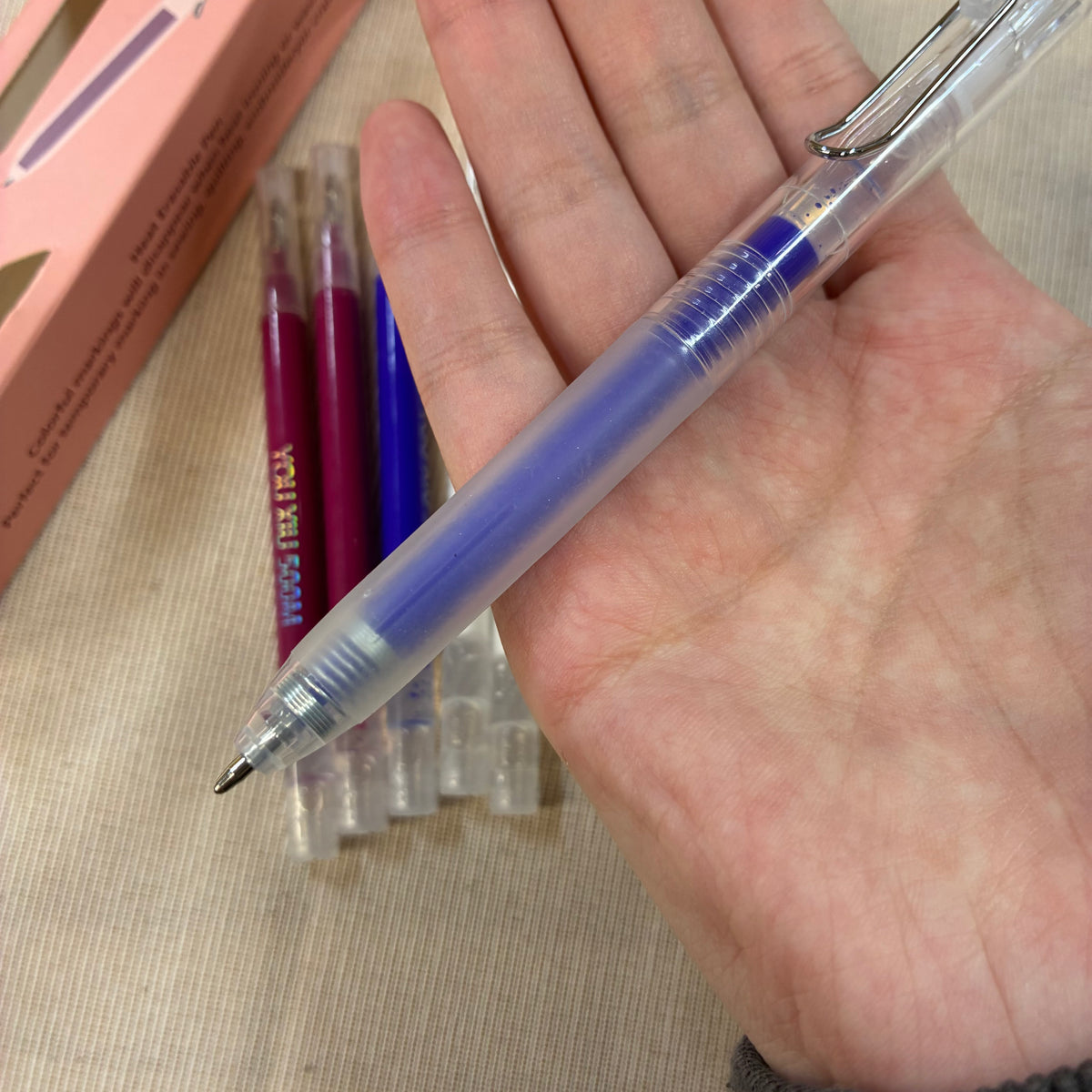
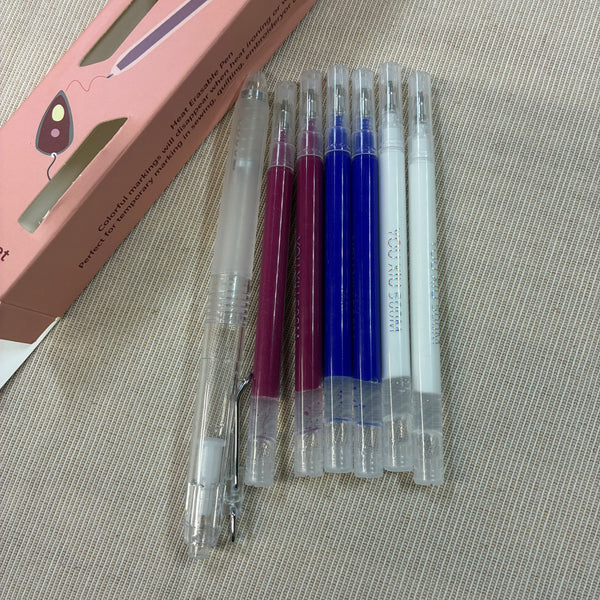
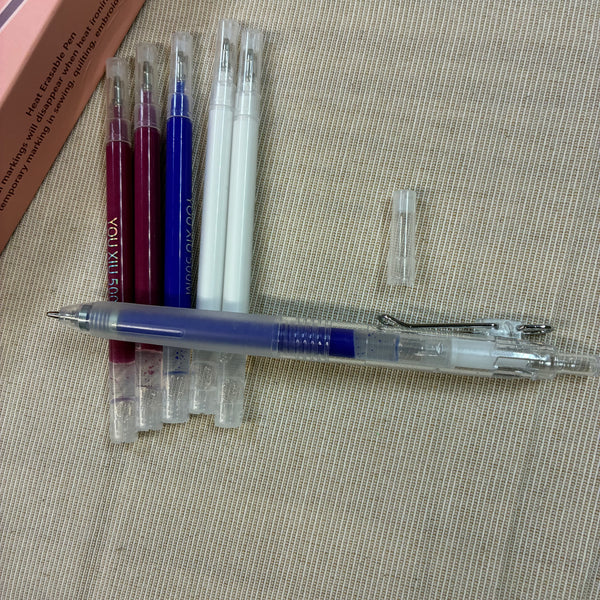
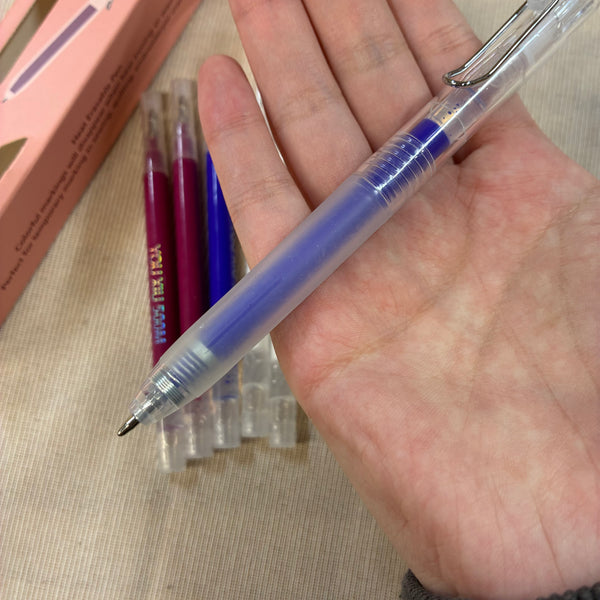
- 1 retractable pen with metal clip
- 6 high-capacity refills: 2 burgundy, 2 blue, 2 white
Features
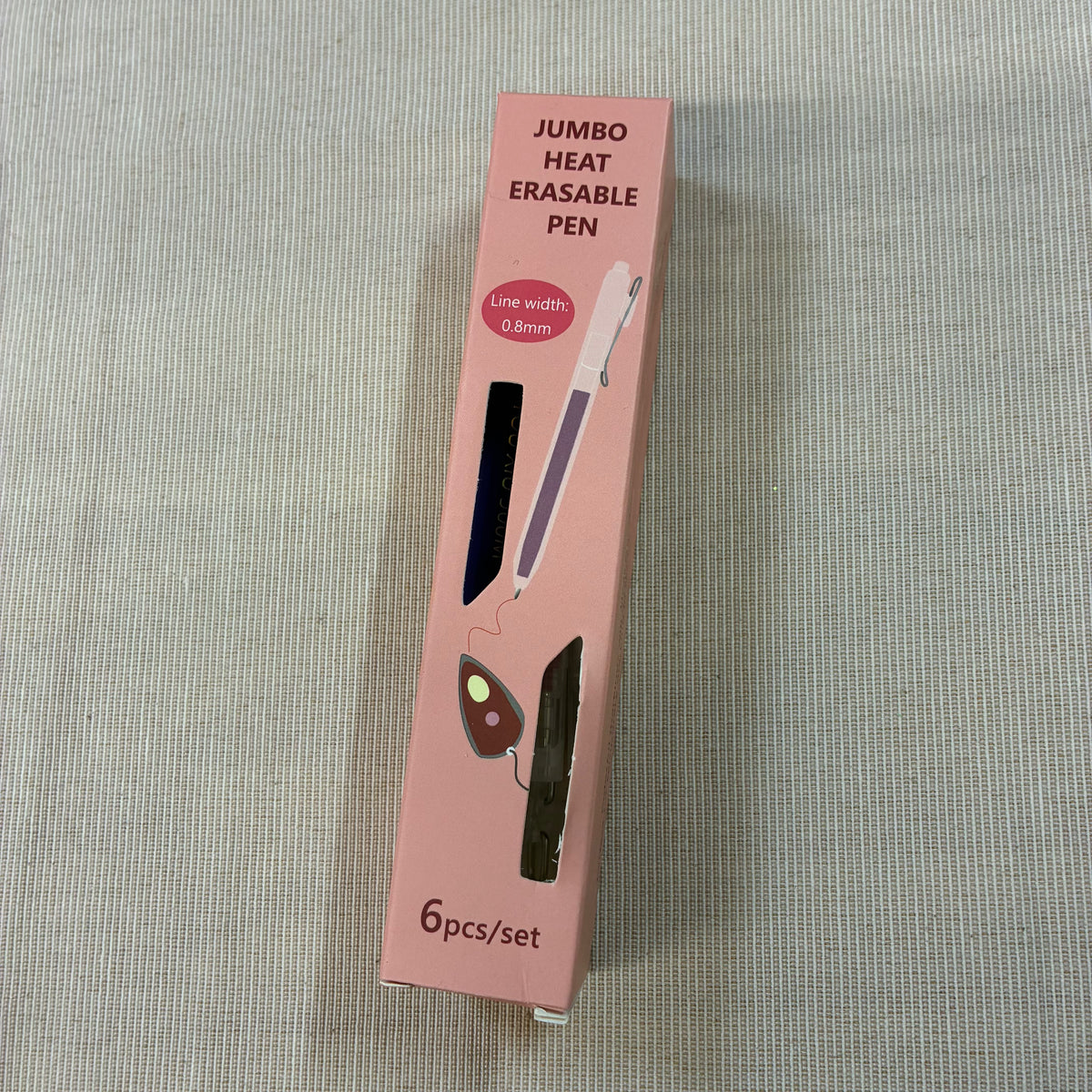
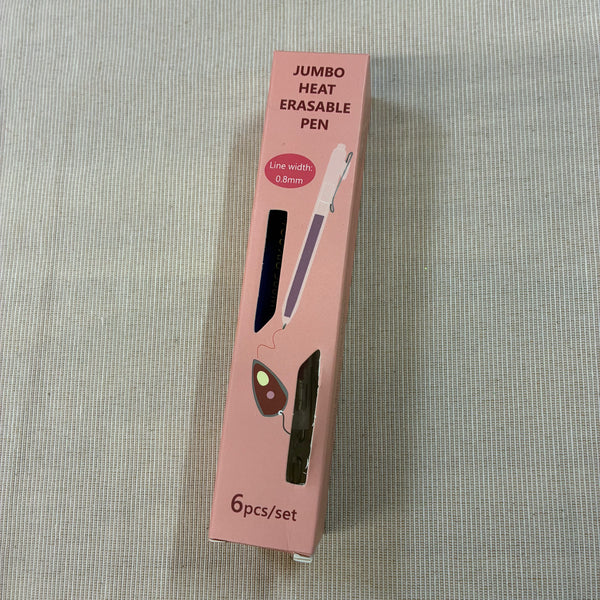
- Line width: 0.8 mm
- Up to 500 m of line per refill (manufacturer data), around 3,000 m for the whole set
- Ink disappears at around 60 °C
- White refill for dark wool and fabrics
- For felted wool, felt sheets, fabric and leather
How to use it
- Draw your marks directly on the wool or fabric.
- Felt, embroider or sew along your lines.
- Erase with an iron on flat pieces, or with a heat gun on 3D pieces.
To change colour, simply swap the refill in the pen.
Always test on a scrap or a hidden area first: on some fibres or dyes a faint mark may remain. The ink reacts to temperature: in very cold conditions an erased line can come back, and another touch of heat erases it again. Store the pen away from heat sources (radiators, a car in full sun), otherwise the ink may turn invisible inside the refill. On 3D pieces, use a heat gun rather than an iron so you don't flatten the wool.
What is needle felting?
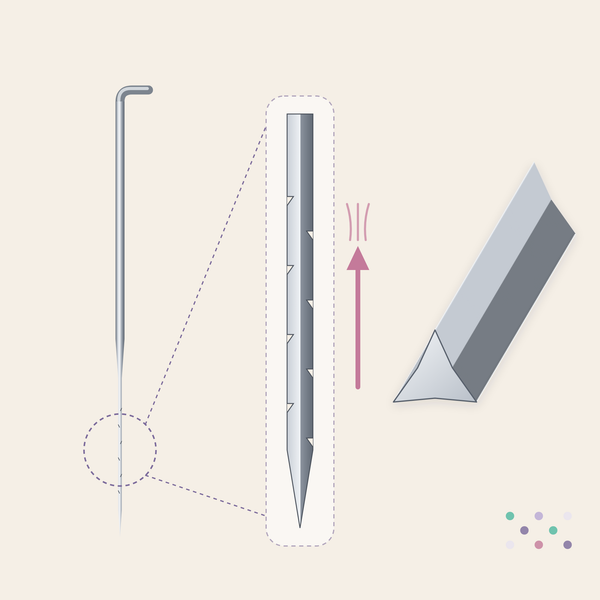
Needle felting means sculpting wool with a barbed needle. With each poke, the fibers catch on one another and the material becomes firmer.
We work with short-fiber wool, ideal for fine, realistic pieces: brooches, keychains, small animals.
The gesture is slow and steady. You settle in, you breathe, and the shape appears little by little. No experience is needed to start.
Materials and Features
Short fibers felt faster, compact firmly and give a smooth surface: ideal for sculpting and fine detail. Long fibers are softer and used for fur, hair effects or wet felting. Realistic 3D work is built mainly with short fibers.
Wool of Spanish origin, dyed and processed in China, then packed in our Bagnolet studio.
Shipping and Returns
Prepared and shipped within 2 working days from our Bagnolet studio. Delivery in mainland France takes 2 to 4 working days depending on the carrier, free to a pickup point from €49 (€3.90 below). European Union: 5 to 8 working days, €9.95, free from €80.
You have 14 days to exercise your right of withdrawal, under the conditions of our refund policy.
- France
- 2–4 working days · pickup point €3.90 (free from €49) · Colissimo €7.95 (free from €80)
- European Union
- 5–8 working days · €9.95 (free from €80)


YOU MAY ALSO LIKE
More little projects to discover.
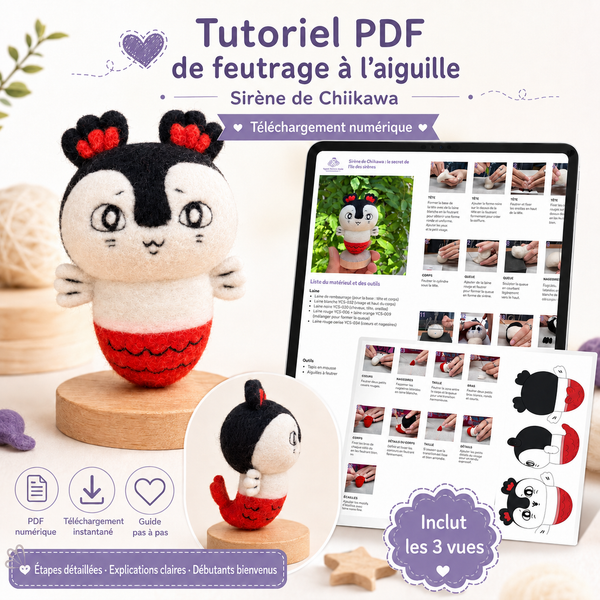
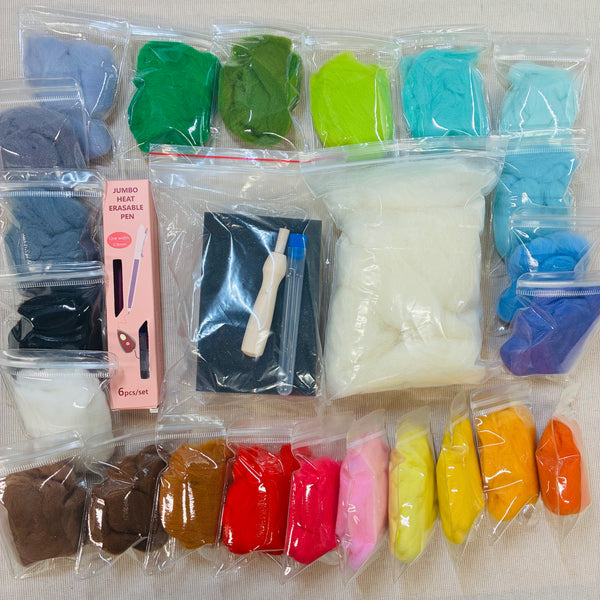
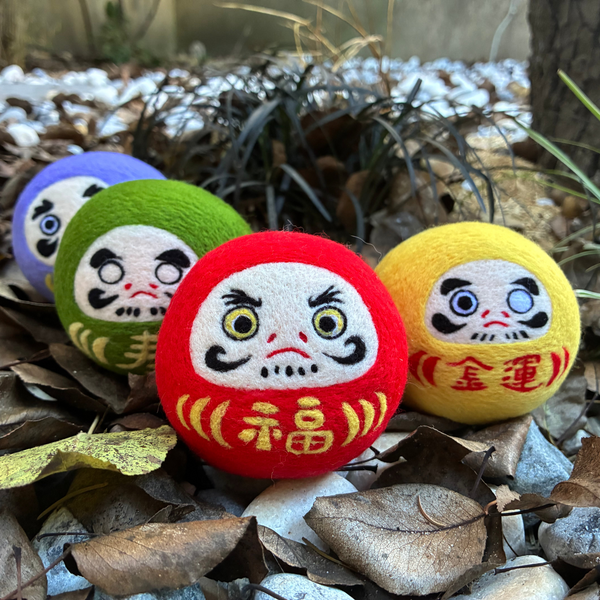

The color chart above shows our full range. Is a color out of stock? Contact us: once your pre-order is confirmed, we start production with our workshop. Lead time is about one month. Please specify the color numbers and quantities you need.


NEEDLE FELTING
Sculpt wool, needle stroke after needle stroke.
A little short-fiber wool, a felting needle, and a small creature slowly appears in your hands. No sewing, no glue, no water.
WHY YOU'LL LOVE IT
Wool chosen for slow, mindful making.
Meditative
The repeated motion of the needle soothes the mind: a quiet, screen-free moment just for you.
Short-Fiber Wool
Wool selected for needle felting: dense, easy to sculpt and ideal for fine details.
Rich in color
A palette designed for gradients and blending, to bring fur and faces to life.
Prepared in France
Sorted and packed by hand in our studio near Paris, then quickly shipped across Europe.
FREQUENTLY ASKED QUESTIONS
Your questions, our answers
What is needle felting and how does it work?
Needle felting means repeatedly poking wool with a barbed needle that tangles the fibers: the more you poke, the firmer the material becomes and the better it holds its shape, 3D or flat. No water, no soap, no heat: just a needle, some wool and a mat.
What is the difference between needle felting and wet felting?
Needle (dry) felting tangles the fibers through the mechanical action of the needle, perfect for 3D shapes and detail. Wet felting uses water, soap and friction, ideal for flat surfaces, scarves and large pieces. Needle felting is better suited to realistic animals and details.
Is needle felting suitable for beginners?
Very accessible for beginners. Few tools and low cost: a needle, wool and a mat. Most people start with a simple ball or a small animal and finish their first piece in a few hours. The challenge is patience, not the technique.
What do you need to start needle felting?
Minimum list: wool, a felting needle and a mat. Optional but recommended: finger protection, a multi-needle holder for larger surfaces and small scissors.
Which wool should you choose for needle felting?
For needle felting, use wool made specifically for felting, and choose according to the stage:By useCore wool (for example Corriedale): quick to shape and economical, for the inner base.Fine surface wool: merino for a smooth surface, alpaca or Shetland for a natural look.Beginner or experiencedCarded wool is lofty and easy to work, perfect for beginners.Combed wool is smoother, better suited to finishing and clean surfaces.The key point: long fibers or short fibersOften overlooked, but decisive for the result:Short-fiber wool: short fibers that separate easily, for finer shaping and a smoother surface; ideal for characters, animal figures or small pieces with a neat finish.Long-fiber wool: better suited to wet felting, or to rooting hair on realistic animals to imitate real fur.In short: for small, well-formed, smooth pieces, choose short fibers; for a realistic fur effect, go for long fibers.
Short fibers or long fibers: which for sculpting?
Short fibers felt faster, compact firmly and give a smooth surface: ideal for shaping and detail. Long fibers are softer and are used for fur, hair effects or wet felting. Realistic 3D work is built mostly with short fibers.
Why does my needle keep breaking?
Needles usually break when they bend during poking. Insert and remove the needle straight, at the same angle, without sideways pressure. Do not rush; fine needles (40 gauge and above) are fragile. Always use a mat.
Why order from us?
 Visa
 Mastercard
 Amex
 PayPal

 Cartes Bancaires